

Want to conquer social media marketing for small business?
If you run a small business, we presume that you must spend a lot of time trying to grasp the latest social media marketing techniques and determine how they can help uplift your growth. And the good news is – you’re doing that for all the right reasons.
Why Is Social Media Marketing Significant for Small Businesses?

An estimated 5 billion people from around the globe are actively surfing through social media platforms, which is twice the number of active users from the data gathered five years back.
Another insight shows that each of these 5 billion people spends an average of 2.5 hours of their day on social media, which is such a massive opportunity for small businesses to reach the potential audience and maximise brand presence with perfection.
The great things you can do as a small business in those 2.5 hours may include the following
- Maximise brand awareness amongst your potential audience
- Build in-depth and reliable customer relationships
- Drive leads and even make conversions via social media channels
We all know that people spend most of their time on their phones, and social media platforms are among the most used apps on them. If you’re a small business aiming to target the regular audience, be it people interested in clothing, travel, fashion, and so on, your audience is definitely using social media, and that is exactly the place you can reach them through.
This makes social media the perfect platform to build awareness around your brand and make customer relationships that can lead to brand loyalty and recognition. While traditional marketing methods, such as TV ads, print ads, billboards, etc., are very effective and revenue-generating, it is difficult for a small business to invest in such expensive marketing tactics.
Additionally, these tactics do not guarantee extensive reach, and you cannot even measure the outcomes effectively. In contrast, major social media platforms are free to access and require very little investment to advertise your brands with a way better reach than traditional mediums and that too with effective means of measuring the outcomes.
Not just that, social media networks have become a major part of people’s lives, and most of your target audience has access to them, no matter what niche you’re dealing with.
Thus, it is very easy to reach out to your potential audience via social media or digital marketing rather than using traditional methods. However, you cannot just build your social profiles and start posting stuff.
Like any marketing medium, social platforms also need a proper strategy and execution. You cannot treat your social platforms as individuals and post random stuff, but you need to build a proper brand voice and value through the content you share, and that requires planning and proper social media marketing strategies.
Not sure why small businesses need an effective social media strategy? Here’s a detailed explanation to clear your doubts!
Why Do Small Businesses Need An Effective Social Media Strategy?

While in the earlier days, when there were very few social media options available and no defined algorithms, businesses had the flexibility to just pop up on their choice of social platforms and post whatever they liked whenever they had time.
Though social media platforms existed, social media marketing for small business wasn’t a thing, and nobody thought of them as a means of connecting to the target audience and building brands out there.
Times have majorly transformed. Social media marketing for small business has become one of the most significant inbound marketing strategies.
And with platforms evolving themselves as marketing tools for businesses, there’s some massive competition on social media, and it has become a challenge for any business to reach potential audiences and mark their name as a top-notch brand.
The most important transformation social media has brought into the business landscape is making marketing a two-way communication and pushing brands to be highly customer-oriented.
Traditional marketing was all about how a brand wanted to communicate with its customers and target audience. Social media marketing, on the contrary, is about how your customers and target audience want you to communicate with them.
The more relevant and relatable content you’ll share across social media platforms, the better you’d be able to build a connection with your audience.
And to share such content, you’ll need proper strategy and execution. Strategizing your content would definitely involve research around your market, consumers, and competition. The truth is – these three are the most significant areas to dive into if you really want to ace your small businesses up at some incredible height.
Not sure how to create and execute the most effective social media strategy for your small business? This guide to making social media easy for small businesses is all about teaching your tactics of creating an exceptional social media strategy that can make your small business the customers’ first choice.
Creating an Effective Social Media Strategy for Small Businesses – The Big Five Platforms
Want your small business to outperform with extensive brand awareness and a lasting connection with your target audience? Take a look at this incredible guide to making social media easy for small businesses, and get inspired!
There are multiple social media platforms with different followings and usage across the globe. You don’t have to build an active presence across all those platforms. The tip of the day is to only activate your business on social platforms that are integral to your target audience.
There are several ways you can determine which platforms your target audience is active on the most, with competition analysis and customer survey being on top of the list.
However, if you’re running a small business, we can even give you a list of the top five social platforms that are most important. They include:
- TikTok
- YouTube
Now that you know what social media platforms to tap into as a small business, let’s dig deep into how you can best create a social media marketing strategy for these social channels and take your brand to the next level!
Facebook Marketing for Small Businesses
Facebook remains one of the world’s largest social platforms, with an estimated 3+ billion monthly active users globally. Because of its scale, audiences across almost every niche are still highly likely to have a presence on Facebook, making it a strong platform for broad reach and community targeting.
What continues to set Facebook apart is its long-standing focus on business functionality. As part of Meta Platforms, Facebook has developed a wide range of tools for brands, such as Pages, Groups, Marketplace, Ads Manager, and detailed audience targeting, designed to help businesses connect with users and build brand awareness at scale.
What to Post on Facebook?
While Facebook is truly a conversational platform, when your consumers are looking up to your Facebook account – they are much more likely to receive the latest updates about your business.
From the latest products and services you’re offering to the sales, promotions or any events you’ve recently conducted – each of these things can become your social media content and be a source of engaging and building connections with your audience.
However, a Facebook account that only shares information about sales and promotions is not what the customers like most. Today’s customers expect a lot more from the brands than just direct selling, so you must always ensure to publish a mixture of content.
The best combination you can post is brand awareness, information, and engagement content.
While informational content can raise awareness about the problem your brand caters to and provide solutions for, brand awareness content can push up your funnel by showcasing your products and services as a solution to the discussed problem.
The engagement content, however, needs to be highly customer-related and have the element of entertainment and trigger so the audience really engages with that.
For instance, posting relatable memes, conducting giveaways, and sharing interactive visuals can really be a means of triggering customer engagement on your Facebook profile.
When To Share Content on Your Facebook?
While there are no limitations to when and how much you should post on Facebook as a small business, bombarding your audience with constant posting or ghosting those for days aren’t the best option. Create a social media calendar beforehand to avoid these mistakes.
It is important to determine the right frequency of posting and set your times in alignment with when your target audience is most active on the platform. It can help you reach the audience in the exact moments they’re active, and boom – what else could be the best moment to connect and engage with them?
Numbers suggest that engagement rates of the posts have dropped for businesses that publish content more than twice a day in comparison to those that post once every day. While positing too much can result in annoying your target audience, positing very little can also impact your engagement metrics negatively.
Thus, the best approach is to find a balanced posting frequency in compliance with your customer research.
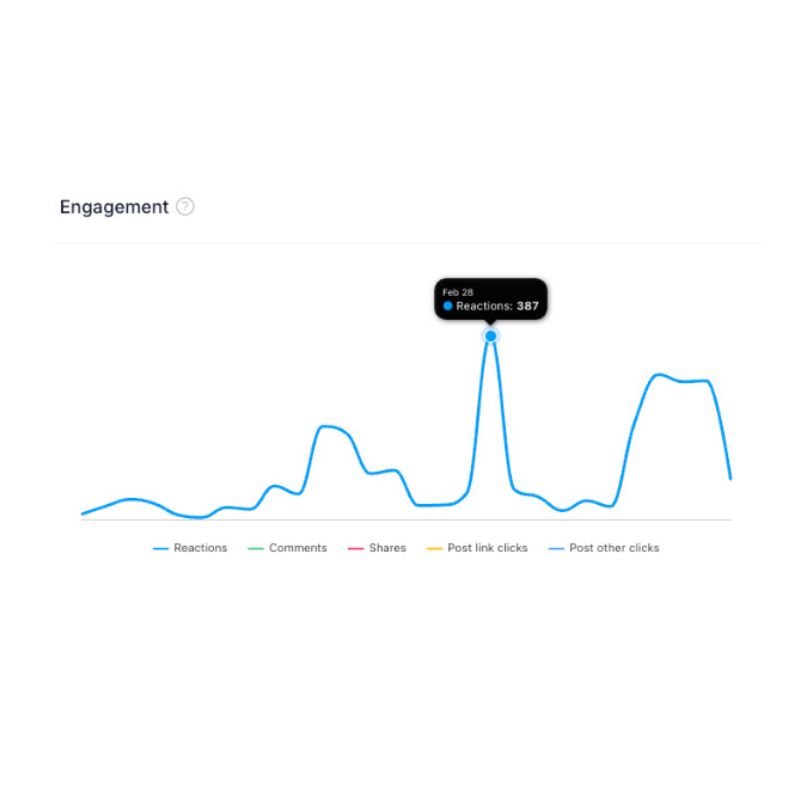
Feedalpha helps you understand the best times to post and the type of content your followers love.
Our analytics tool gets right to the heart of what matters for your small business.
Social Media Tips to Boost Your Engagement on Facebook
The most effective Facebook engagement strategy is to create content that feels natural in the feed. The more your posts match the tone of everyday content users already interact with, the higher the likelihood of engagement, such as likes, comments, shares, and saves.
However, being casual does not mean being random or unfocused. Every post should still align with your brand identity, audience interests, and marketing goals. Irrelevant content may get attention temporarily, but it won’t build trust or long-term engagement.
The key to improving Facebook engagement is to consistently publish content that is:
- Casual in tone, but intentional in purpose
- Relatable to your target audience
- Valuable in solving problems, answering questions, or entertaining
- Naturally aligned with how users consume content in their feed
TikTok Marketing for Small Businesses

TikTok has emerged as a game-changer for small businesses looking to increase visibility, attract new customers, and build a loyal audience without requiring large marketing budgets.
Unlike traditional social media platforms, where growth often depends on follower count or paid advertising, TikTok’s algorithm gives every piece of content a chance to be discovered. This creates a unique opportunity for small businesses to compete with larger brands on a more level playing field.
As consumer behaviour continues to shift toward short-form video and authentic content, understanding how to use TikTok effectively is becoming essential for any business that wants to stay relevant and grow.
LinkedIn Marketing for Small Businesses

Launched in 2002 (the same year Harry Potter and the Chamber of Secrets hit cinemas), LinkedIn has grown into the world’s leading professional networking platform. Today, it has well over 1 billion members globally, making it the most important social network for B2B marketing and professional content distribution.
In fact, LinkedIn (owned by Microsoft) continues to dominate the B2B space, with the vast majority of marketers using it as a primary channel for lead generation, brand authority, and professional engagement.
What to Post on LinkedIn and How?
LinkedIn is a professional social network designed for business audiences. If someone follows your company page, they are typically interested in:
- Industry insights and trends
- Business updates and achievements
- Thought leadership and expert opinions
- Practical tips, case studies, and results
Unlike entertainment-focused platforms, LinkedIn rewards value-driven and insight-led content rather than purely promotional posts.
Video content is also increasingly effective on LinkedIn. Short-form, educational, or behind-the-scenes videos that explain your product, share expertise, or break down industry topics tend to perform particularly well.
How often to Post on LinkedIn?
For most businesses, posting 2–4 times per week is ideal. At a minimum, posting once per week helps maintain visibility and engagement.
Consistency matters more than volume. Regular posting signals activity, builds familiarity, and improves reach over time.
Tips to Boost Engagement
To succeed on LinkedIn, focus on quality, relevance, and authenticity. The platform is built for professionals, so content should always provide real value.
High-performing posts typically:
- Share actionable insights or lessons learned
- Highlight real business outcomes or case studies
- Offer expert opinions on industry trends
- Position the brand as a trusted authority
Rather than simply promoting products, the goal is to build trust and credibility over time. The most successful companies use LinkedIn as a place to demonstrate expertise, not just to advertise services.
Instagram Marketing for Small Businesses
Instagram remains one of the most influential visual social media platforms, with over 2 billion monthly active users globally. While it launched after many early social networks, it has grown into a key channel for brand discovery, engagement, and social commerce.
Owned by Meta Platforms, Instagram continues to integrate closely with Facebook advertising tools, allowing businesses to manage campaigns, track performance, and run sponsored content seamlessly through a single business ecosystem.
Today, Instagram offers multiple content formats, including Feed posts, Stories, Reels, and Live content, giving brands a wide range of ways to connect with audiences.
What to Post on Instagram?
The type of content you post on Instagram should always reflect your brand identity while staying visually engaging and platform-native.
Most effective Instagram content includes:
- Short-form videos (especially Reels)
- High-quality images that reflect your brand
- Educational or informational carousels
- Behind-the-scenes content
- Product showcases and lifestyle imagery
Your posts should communicate your brand personality, values, and offerings in a way that feels natural within a visual-first feed.
How Often to Share Content on Instagram
Maintaining a consistent posting schedule on Instagram is essential for sustaining visibility, engagement, and audience growth.
Recommended Posting Frequency
- Feed posts (Reels, images, carousels): 3–5 times per week
- Reels: 2–4 times per week (key driver of reach and discovery)
- Stories: Daily (or near-daily if possible)
- Live content: 1–2 times per month (optional, for deeper engagement)

Tips for Increased Engagement
YouTube Marketing for Small Businesses

YouTube continues to be the largest video-based social platform, with over 2.5 billion monthly active users and billions of hours of content watched every day. It is also one of the most visited websites globally, and functions as the world’s second-largest search engine after Google.
As part of Google (now under Alphabet Inc.), YouTube plays a central role in both organic discovery and paid advertising, making it a key platform for businesses looking to grow visibility and reach targeted audiences.
Why YouTube Matters for Businesses
YouTube offers long-term value because it combines search engine optimisation (SEO) with video-based engagement. When properly optimised, videos can appear in both YouTube search results and Google search results, creating ongoing organic traffic over time.
For businesses, this means YouTube is not just a social platform; it is also a search-driven discovery engine that continues to generate views long after a video is published.
How often should I Share Content on YouTube?
There is no strict posting frequency, but consistency is key. Businesses should aim to upload content regularly based on capacity and quality standards rather than volume alone.
A practical approach is:
- Start with 1–2 videos per week (or even per month if resources are limited)
- Scale up if analytics show strong traffic and engagement
- Focus on quality, search intent, and viewer retention over quantity
Before increasing output, it’s important to analyse whether YouTube is already driving meaningful traffic and conversions.
Tips to Increase Engagement
To improve visibility and engagement, videos should be optimised for both search and viewer experience. This includes:
- Using clear, keyword-rich titles and descriptions
- Adding relevant tags and proper categorisation
- Creating engaging thumbnails that encourage clicks
- Including calls to action within videos
- Using cards, end screens, and descriptions to drive traffic to your website
Because YouTube is closely integrated with Google’s ecosystem, strong SEO practices can significantly improve long-term discoverability.
Wrapping Up

Now that you know all the right ways to create an effective social media marketing strategy for your small businesses across the different popular platforms, marketing your business on social media must have become easier for you. Using a scheduling tool will help you save time with your overall strategy. feedalpha offers social media scheduling with added value. Take your social media to the next level today.
However, it is an ever-growing industry with a new social media platform popping up every other day and new algorithms and policies introduced over time. Decide what kind of social media presence fits your brand values and follow that strategy. For example, you can build hype for upcoming events, product releases, sales, and more through influencer marketing.
Therefore, if you really want to make social media marketing for your small business an easier and more effective task – you should always stay updated with the latest trends.
The more you’ll know about how the different brands are making use of social media platforms, the better you’d be able to uplift your businesses with the help of social media marketing.

The ‘We Boosted a Post’ Panic: Why Paid Shortcuts Fail When Your Organic Posting Is Inconsistent
The 'We Boosted a Post' Panic: Why Paid Shortcuts Fail When Your Organic Posting Is All Over the Place You've been there. Reach is down, enquiries have gone quiet, and someone in the room says, "Should we just boost a post?" Thirty quid later, nothing much happens....

The Social Media Posts That Get the Most Engagement Are Never the Ones You Spent the Most Time On
The Social Media Posts That Get the Most Engagement Are Never the Ones You Spent the Most Time On You know that post you laboured over for three hours - the one with the perfectly colour-matched graphic, the rewritten caption, the hashtags you researched for twenty...